Service Design · Product Strategy · 2026
Roger's Shoe Repairs
How do you future-proof a 60-year Redfern institution whose entire operation runs on handwritten yellow stubs? A three-phase digital roadmap — Now, Next, Later — validated through a live two-week pilot.
Overview
A frictionless digital service layer that unlocked 14 hours of craft time per week.
As the Lead Service Designer, I co-designed a three-phase digital and service roadmap to transition Roger's Shoe Repairs to its next generation of ownership under Roger's son, Nathan. By launching an agile, two-week live operational pilot utilising an AI-assisted custom internal tool, we validated that introducing a digital service layer could unlock significant capacity for core craft production while driving a measurable increase in customer loyalty.
The Strategic Context
A 4.8-star reputation trapped behind an analog ceiling.
Operating in the inner-city fringe of Sydney, Roger's Shoe Repairs possesses an enviable competitive moat: a 4.8-star Google rating built organically across 246 customer reviews. Yet despite deep brand equity, the business was constrained by a critical operational ceiling.
The Offline Bottleneck
Transactions, inventory tracking, and order notifications were entirely analog — managed via handwritten paper stubs. Customers experienced variable wait times upon entry, frequently needing to shout to the back room because Roger and Nathan were deep in manual labour.
The Demographics Misalignment
While Redfern has rapidly gentrified into an affluent hub of tech professionals and young creatives, Roger's marketing model relied entirely on passive physical foot traffic and local word-of-mouth. Competitors with full digital presence were closing the gap.
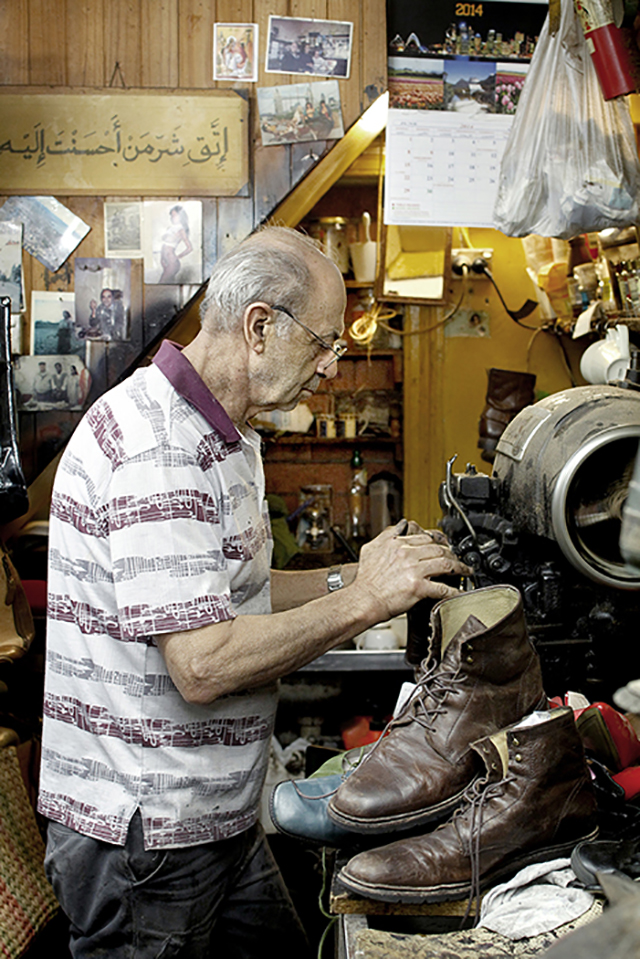
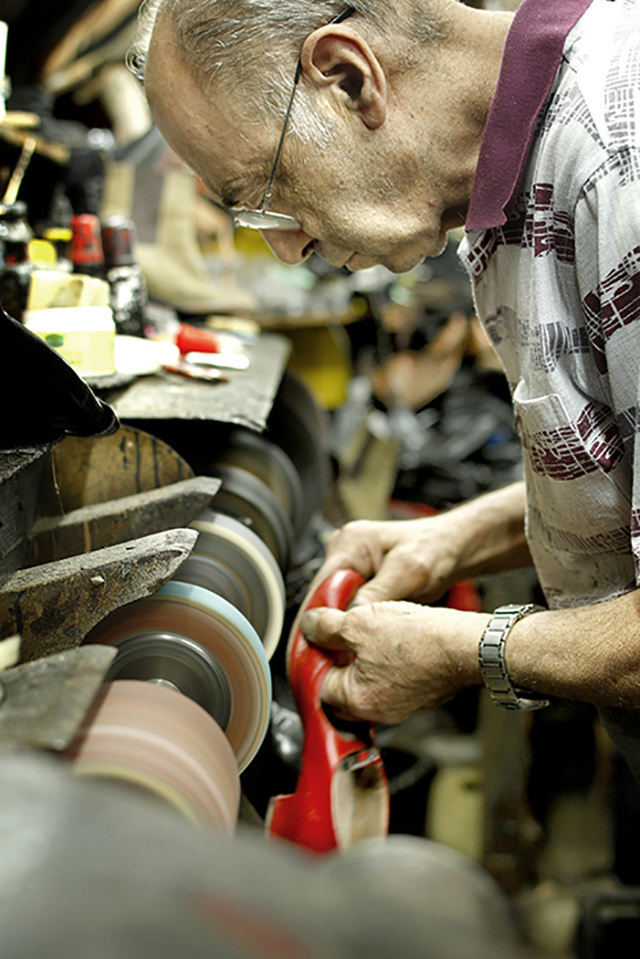
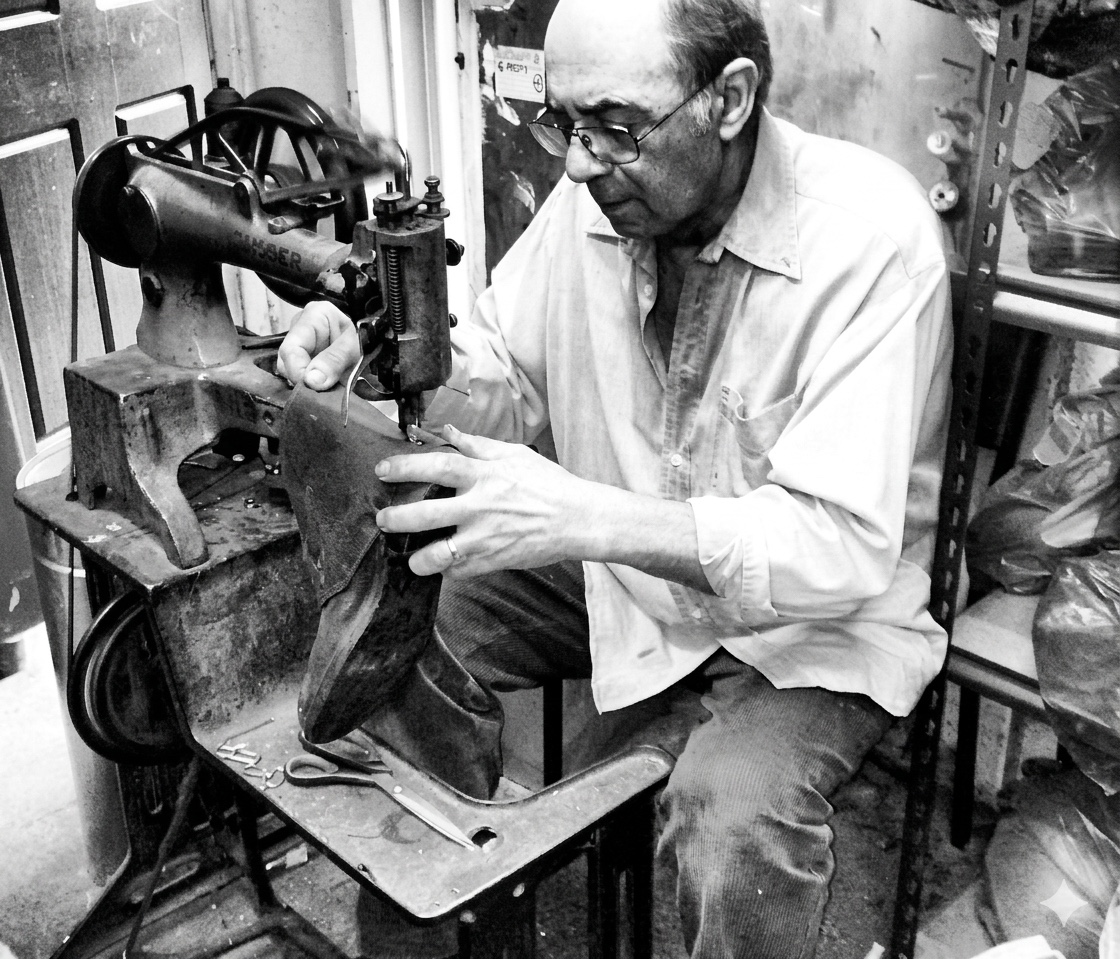
Image courtesy Steven Siewert
Service Blueprint
One blueprint, three breakdown zones, three moves.
I mapped the whole system end to end — physical evidence, customer action and emotion, front and back stage, the technology layer, and time. Today sits on the left; scroll across the transformation seam to watch each zone heal and see where Next and Later attach.
| Today — baseline | → | Future state — Now · Next · Later | |||||||||||
|---|---|---|---|---|---|---|---|---|---|---|---|---|---|
| Stage | Discovers Shop | Check-in & Ticket | Awaiting Repair | Repair & Ready | Collection & Pay | Discovers Shop | Check-in & Ticket | Awaiting Repair | Repair & Ready | Collection & Pay | Next Customisation & Booking |
Later Post-Care & Community |
|
| Physical Evidence | Shopfront sign; word-of-mouth |
Zone 1 Handwritten yellow stub |
Zone 2 Nothing in the customer's hand |
Finished shoes on the rack |
Stub matched by hand |
Google Business, Instagram before/afters |
Yellow stub kept + tablet intake |
SMS thread on their phone |
Finished shoes + "Ready" status |
Stub or SMS at the counter |
Online customiser, studio packaging |
Pop-up stalls, workshop space |
|
| Customer Actions | Walks past, or hears from a friend |
Hands over shoes, takes the stub |
Zone 2 Phones or walks in to check progress |
Still unaware it's done |
Returns whenever they remember |
Finds shop online, books a slot |
Hands over shoes, gives mobile number |
Now Waits — no need to chase |
Gets automatic SMS: ready to collect |
Returns promptly after the SMS |
Designs a restoration or luxury service |
Books a workshop; uses courier pickup |
|
| Customer Emotion | Curious — low expectations |
Trusting, unsure of timing |
Zone 2 Anxious — a blind, silent wait |
Has forgotten about it |
Friction returning on spec |
Confident — found and chose them |
Reassured — in the system |
Now Calm — knows they'll be told |
Delighted — told the moment it's done |
Valued — quick, frictionless return |
Invested — co-created it |
Loyal — part of the community |
|
| Line of Interaction | |||||||||||||
| Front Stage Roger & Nathan |
— | Roger writes the stub by hand |
Zone 2 Shouts status to back; fields phone calls |
Waits for customer to reappear |
Finds shoes, matches stub |
Studio brand, content reels |
Roger still writes the stub; Nathan logs intake |
No interruptions; queue is visible |
— | Quick match via the queue |
Premium "Shoe Studio" positioning |
Hosts workshops, market pop-ups |
|
| Line of Visibility | |||||||||||||
| Back Stage Bench operations |
Zone 3 No demand capture |
Zone 1 Stub is the only record |
Zone 2 Bench work broken by status calls |
Zone 2 Done — but no notice sent |
Zone 2 Shoes sit uncollected |
Social loop, enquiry inbox |
Now Job auto-created, linked to stub ID |
Toggles status on the tablet as work flows |
Now Toggle "Ready" → SMS auto-fires |
32% less pickup lag |
Higher-AOV jobs scheduled |
Courier integration, brand partnerships |
|
| Technology & Support | Zone 3 None |
Paper only | Zone 2 Phone (interrupt) |
None | POS, cash drawer | Website, booking, Google Business |
CRM intake: name, mobile, ticket ID |
Now Status queue: queued · bench · ready |
Automated SMS dispatch |
POS + CRM order closed |
Web customiser, payments |
Uber Direct API, loyalty loop |
|
| Time / Duration | Passive — no capture |
~2 min handwritten |
Zone 2 Days of silence + chasing calls |
Hours–days idle before pickup |
Unpredictable return window |
Always-on presence |
~30 sec digital intake |
Now 14 hrs/wk recovered |
SMS within seconds |
32% faster pickup |
Booked slots, planned capacity |
Recurring care cycle |
|
Full service blueprint — today beside future state across physical evidence, customer action, emotion, front stage, back stage, technology, and time.
Three breakdown zones became the roadmap.
Reading the blueprint top-to-bottom didn't just locate the friction — it sequenced the response into three moves: Now, Next, Later. Each zone mapped cleanly onto a move, and the most acute one became the pilot.
The Pilot
A two-week live test, walked through scene by scene.
To test the hypothesis without platform overhead or long build cycles, we used agentic AI to stand up a bespoke, ultra-lightweight CRM in days. The yellow stub stays exactly where it is; the tool only logs its ID. Every job lives in one queue, a single tap at the bench flips a repair to Ready and fires the SMS itself, and the finished order hands straight to the till. Play through the six moments below.
Logging a walk-in repair at the counter
New repair
Repair queue
The status change is the message. No call to make, no one to chase.
Fired the instant Y-2841 flipped to Ready.
Order
Pilot Results
Within the first seven days, the results were clear.
The system was deployed as a live operational pilot inside the shop, running alongside the paper stubs it was designed to complement rather than replace.
By proactively closing the communication loop, we transformed dead administrative time into profitable bench-crafting capacity.
Impact
From verified pilot to projected growth trajectory.
The matrix below separates what we measured in the two-week pilot from what we've modelled for the year ahead.
| Metric | Baseline | Outcome | Impact |
|---|---|---|---|
| Measured · live two-week pilot | |||
| Administrative Overhead | 18.5 hrs / week | 4.5 hrs / week | 14 hrs recovered |
| Order Tracking Accuracy | Variable | 100% | Zero defects |
| Modelled projection · from freed capacity & premium positioning | |||
| Weekly Order Throughput | 75 repairs | 92 repairs | +22.7% |
| Average Order Value | $42.30 AUD | $50.00 AUD | +18.2% |
| Weekly Gross Yield | $3,172.50 AUD | $4,600.00 AUD | +$1,427.50 / week |
| Annualised Run-Rate | $165,000 AUD | $239,250 AUD | +45% |
| Customer Engagement | Passive / local | Active omnichannel | Premium demographics |
If I Were Iterating Today
Designing for stakeholder readiness, not just the end user.
The real lesson was about who you research. User research can't stop at the end-user — it has to account for whether the people running the service are ready to change. Our early field interviews made Roger's friction obvious: the handwritten yellow stubs weren't just a process, they were tied to his professional identity and 60 years of community trust.
Forcing a radical digital overhaul on Roger would have resulted in high operational churn. We reframed the roadmap not as an operational overhaul for Roger, but as a succession product suite for Nathan.
Recognising this, I sequenced the roadmap so Roger could keep working exactly as he always had, with nothing new to relearn — and built the digital layer for Nathan, his son and successor.
I'd look for non-intrusive bridges that respect how Roger works. Instead of removing the yellow stubs straight away, an OCR module in the tablet could let Roger keep creating tickets by hand — tactile, familiar — while it quietly populates Nathan's digital CRM in the background. Respect the ritual; digitise the data.